Registered under the National Arts Council of Zimbabwe

18 April 2014

WIN Newsletter, Issue No 76


EDITORIAL


May we take this opportunity to express our heartfelt condolence to the Mukonoweshuro family for the passing on of writer Sharai Mukonoweshuro a few weeks ago. Mukonoweshuro wrote gripping Shona novels such as Ndakakutadzirei, Ndakagara Ndazviona and Akafuratidzwa Moyo (1983). It is Easter season and hoping that you are bracing up for 2014 HIFA (April 29 - May 4) in Harare and various other literary activities happening everywhere near you. WIN would like to encourage its members to attend a Members Meeting to be held on Saturday, May 24 once all details are made available soon. The meeting is two-fold, that is, it will address the status of WIN as well as be part of the 2014 Culture Week celebrations (more info on Culture Week is below in this newsletter). Please enjoy.

YOU ARE INVITED


WRITIVISM MOVES TO NEXT STAGE


Now that the Writivism workshops, conducted by Centre for African Cultural Excellence a few months ago, have been successfully held  in five African cities, including Harare, new writers should now gear up for the Short Story Prize and the Writivism Festival to be held in Ghana in June this year.
According to Writivism, about 47 flash fiction stories have been produced from the workshops and the first batch of the stories is accessible at Books Live SA.
The Short Story Prize submissions are open to all emerging writers resident in Africa and close on April 30, 2014. The five shortlisted writers will have an opportunity to attend the Writivism Festival where winners will be announced. The overall prize is worth $400, First and Second Runner-ups will get $200 and $100 respectively while regional winners will be awarded $80 each. Adjudicators of the Short Story Prize include Ellen Banda-Aaku, Zukiswa Wanner, Emmanuel Sigauke, Abubakar
Adam Ibrahim and Glaydah Namukasa.
Submission guidelines are found HERE.


THE MUNGOSHI’S JOURNEY OF LOVE, TRIALS AND TRIUMPHS

By Beaven Tapureta
 
(Article first appeared on Munyori Literary Journal)

Jesesi Mungoshi

The year is 1974. Jesesi Mungoshi, then a single young woman, is lying ill in her room at her sister’s house. She is apparently in pain. In a short moment, her sister’s husband comes into the room in the company of a friend and a fellow artist named Charles. Introductions are made.  Charles has already published his first book Coming of the Dry Season (1972) but this information escapes the intros and Charles keeps it that way.
Jesesi is not sure if the men are drunk or not but the first words Charles says are, “Ah saka tinoziva vakareba sei kana vakarara? (Ah, so how do we know her height when she is lying down?)
Although she is in pain, she bursts out laughing. Why is she laughing? She cannot tell. Later, the two men leave the house. But Charles has done his job like a doctor of love with the romantic poetry of his few words.
The above is but one of the fondest moments Jesesi Mungoshi, a gifted actress and wife of the great author Charles Mungoshi, remembers about her early days of acquaintance with her husband.
Jesesi, who featured in the Zimbabwean film Neria as the main character Neria, narrated touching episodes in the life of her family and the great writer at a Zimbabwe Writers’ Association organized writers’ gathering themed ‘Writers’ Family Reminisce’ held on Saturday, April 5, in Harare.
In 1974 Charles was working for the then Book Centre (now Textbook Sales) while she had finished school but had not yet decided which career to follow in her life. When she then fell in love with Charles after the first encounter, he proposed to marry her that year but she refused.
Her refusal to get married disappointed the young lover Charles whose intention had been to work and raise money for the bride price.
He told her he was resigning from his job because there was no more reason to work. And he actually left his job and used this free time to finish his two books Ndiko Kupindana Kwemazuva and Waiting for the Rain which simultaneously came out in 1975.
Love is an invisible twine that draws two hearts to each other regardless of strict decisions made earlier. It is even more true that the heart knows what the mind may not.
With a brother strongly advising her to first proceed with her education, Jesesi found herself in a tight spot where she had to choose between getting married and lose his brother’s trust and perhaps his support or lose the man of her heart.
Jesesi said she decided to get married. Immediately after receiving the good news, Charles right away went back to work but for a different employer. He found a job at the Literature Bureau after being recommended by the late great actor Walter Muparutsa who by then worked at the Bureau. In a few months, Charles saved his money and married the love of his life in 1975. The following year the couple was blessed with their first born son and named him Farayi (Be happy).
Charles’ deep passion for writing exhibited itself even at unusual times, said Jesesi.
At some point soon after getting married, Jesesi said she boarded a bus with Charles to Mbare. It was supposed to be a romantic day out.
“As a woman I was excited to be sitting next to my man in the bus and I expected a conversation,” she said.
But the writer Charles always made sure he carried a notebook in his pocket. On this day in the bus he fished it out and started jotting notes about what he observed around him. His nature made Jesesi want to know him better and be part of his life.
Jesesi said Charles would later at home condense his notes and it would take him a few days to finish a complete manuscript. During the period when he is writing, he would enter and live in his own world.
“He would literally get possessed by writing that he would not see you walking into the room,” said Jesesi.
She remembered Charles once told her about an experience he had after completing his manuscript Makunun’unu Maodzamoyo which is set in Manyene, Chivhu.
Charles was living in Kambuzuma but what happened was that while writing the book, he lost sense of where he was. At 3am, after he finished what would become a masterpiece, he rose, stretched out arms, satisfied with the completion of a task. But something was wrong in his mind. He could not tell if he was in Harare or Chivhu.
As told to Jesesi by Charles, this was a moment the author drifted on the edges of insanity as his mind immediately plunged into a vexing cloud of reality and imagination. But he slept only to be awakened later by birdsongs and then he sobered.
Although Charles’ drinking habit could have scared her out of her marriage, Jesesi said she stood strong by him because she had accepted her husband wholeheartedly. For her, marriage is a matter of committing oneself to the promise of love and faithfulness even during hard times.
“At some point he worked at the UZ and I would some days get a phone call informing me Charles has been arrested for drunken driving and sleeping in the car parked in the middle of the road. I would go and collect him from the police station. I would know his writing troubles as I wanted to be part of him. I kept going strong because I knew God had a purpose for us,” said Jesesi.
She went on to rubbish claims made by the media some years ago that she had divorced or abandoned her husband.
In 2010, the Mungoshi family faced the biggest challenge. Charles had taken a long break from drinking but one evening he just could not sleep because of severe pain. Jesesi said her family thought of prayer before they thought of the hospital and thank God he got better and slept very well that night.
On another evening Jesesi was invited to an all-night prayer at the church by her sons Farayi and Charles Jnr. Before she went out, she checked on Charles in the bedroom. He was asleep holding in his hand a beer bottle that still had almost all its contents. She took the bottle, replaced the beer with water and put the bottle back on the bedside table.
The next morning when she came back home Jesesi said she simply slipped in and slept beside Charles, not wanting to disturb him.
At around 12 noon their daughter came in and she was the first to discover that neither Charles’ eyes were blinking nor his body moving. Jesesi was awoken by her daughter’s scream. Her two sons joined her and efforts to resuscitate Charles were fruitless. The family started to pray and prayed before they took him to hospital.
“I grew up being a fearful woman but when I received Christ I was strengthened to the extent that when Charles fell in a coma on that day, my children and I believed he was going to be fine,” said Jesesi.
During the time when Charles was hospitalized, some relatives lost hope and others suggested taking Charles to their rural home. Arguments erupted. On the other hand, the doctors were beginning to lose hope. The children stuck with their mother and assured relatives that their father is going to be alright.
Then one day, a nurse on duty walked into the ward where Charles was and there he was, Charles sitting in his bed. What seemed a hopeless situation suddenly transformed itself into a triumphant scenario.
Later the family took Charles to St. Giles Rehabilitation Centre in Harare and his condition improved. He had begun using a wheel-chair but at St Giles he gradually started to walk.
An organization from Kenya and the government of Zimbabwe assisted the family in paying for the costs incurred in hospital and at St. Giles, said Jesesi.
“At home, prayer kept us hoping and to date, I have seen tremendous improvement in Charles’ health,” she said, adding that she would have brought him to the meeting had she found proper private transport.
Jesesi also hinted on some of Charles’ publishers’ insensitivity, saying she remembered during these trying times one publisher demanded that Charles (who was not able to walk or talk) and nobody else should come to speak with the company. However, the hiccups with publishers have been solved now with the help of lawyers, she said.
In all the problems which she faced during her husband’s illness, Jesesi said she is very much indebted to her sons for the togetherness ad maturity they exhibited. Today, the family has set up a publishing company called The Mungoshi Press which published Charles Mungoshi’s latest and NAMA Award winning novel Branching Streams Flow in the Dark.
Writer Shumirai Nhanhanga who also attended the writers’ gathering thanked Jesesi for being a woman of strength.
“You are a woman of a kind who stood up by your husband. Many women would have given up in such hard times but you were there for your husband. You did not break the promise. You are his hope. Even the children and relatives will be proud of you as their hero. As a woman also I am proud of you. We thank you so much for standing by our fellow writer,” said Nhanhanga.
Writer and actor Lexta Mafumhe Mutasa, son of the late renowned author Nobert Mutasa, also spoke at length about how his father related to his family as a writer. The Dambudzo Marechera and Solomon Mutsvairo families, who were also expected to present under the same theme ‘Writers’ Family Reminisce’, were not able to attend due to forces they could not control.
The meeting was held at the Centre for Applied Social Sciences in Belgravia and was chaired by writer Memory Chirere and attended by a group of about sixteen writers. The meeting also provided an opportunity for ZWA members to get updates from their Chairperson Musaemura Zimunya.


HERBERT WANTS TO COME HOME – MASIMBA MUSODZA


UK-based Zimbabwean writer Masimba Musodza’s horror fiction Herbert Wants to Come Home is moving upwards on the Jukepop Serials, an online publishing platform which gives readership statistics.  According to a press release, the book is the most read horror story by a Zimbabwean writer on Jukepop. We were interested, according to Jukepop, that the story is becoming popular with Zimbabwean female readers. What could be the ‘hook’ for women in this particular horror story?
The book can be accessed here.
 

ZIMBABWEAN WRITERS’ TROUBLE IN PARADISE

By Beaven Tapureta

(Article first appeared on Munyori Literay Journal)

 
Lexta Mutasa, son of the late novelist Nobert Mutasa, presenting at a ZWA writers' meeting last week

Zimbabwean artists, particularly writers, have been skeptical of wills and this has led to the mismanagement or utter neglect of their artistic estates when they pass on. While families of deceased artists may largely carry the blame for not raising a brow, artists need also to take responsibility of their creative works as these constitute wealth in other terms.
A large number of local writers have died and their contribution to literature is remarkably great yet they have had their legacies dwarfed either by the commerce of the publishing industry or by family apathy. Their unpublished works are forgotten somewhere in a relative’s home or their royalties, in some cases, which must benefit the surviving spouse or children, have no one to claim from the publishers.
At a Zimbabwe Writers Association meeting held in Harare last week to discuss Writers’ Families Reminisce, writers supported the need for them to write wills before they die. They noted with concern that family support is vital to ensure continuation of a deceased author’s writing vision.
Much of the discussion on writers’ wills was hinged on part of a presentation made by Lexta Mafumhe Mutasa who briefly gave an account of his family’s attitude towards setting up a Trust in honor of his father, the late writer Nobert Mafumhe Mutasa who died in 2004.
Lexta, who is also a poet, writer and gifted Shona ‘linguist’, said when his father died he left no will and therefore his creative unpublished works remained scattered within his family and up to now, no one has taken the initiative to gather them for possible publication.
“Most of the family members and relatives like to associate with the popularity of the name Mutasa but only a few have actually read his works or think about keeping his legacy in different ways. Much of the blame is on us the family,” said Lexta.
Mutasa, who died a polygamist with eight wives and about fifty two children, penned eleven books including the old world trilogy ‘Mapatya’, ‘Runako Munjodzi’ and ‘Hondo Huru’. Some of his books were popular as Shona literature study material at school.
Mutasa’s immense contribution to Zimbabwean literature was visible in ‘the golden ages’ of the Shona novel, during which period also emerged the first generation of black Zimbabwean writers.
Although it’s sad that his family, aware of such greatness of their father, has detached itself from his writing legacy, Lexta said he is determined to carry it forward.
“When my father died, he already knew that I was to follow in his footsteps,” said Lexta whose gift of Shona language was demonstrated when he featured in a local TV soap called ‘Tiriparwendo’ a few years ago. He also was a script writer for the local soap Studio 263 with about 500 episodes penned by him.
“My father would even publicly say that I am the one whom he wanted to carry on with his writing legacy but this is not in a will,” said Lexta.
Asked by Chirere what he foresees and his advice to other living writers, Lexta said he also needed advice on how to set up a Trust which could help organize Mutasa’s unpublished works and speak with one voice in matters regarding his writing. This, he said, would also influence living writers to take responsibility of their works beyond death.
The eleventh book by Mutasa was a Shona children’s story titled ‘Kushereketa Kwepwere Nemapere’ which Lexta said he helped his father translate into English and it was published by Zimbabwe Publishing House (ZPH) as ‘The Dangerous Journey’ in 2000.
As an artist in his own right, Lexta said he is haunted by his father’s shadow as he cannot separate himself from the great name Mutasa.
“I am a very haunted artist. I cannot escape the shadow of my father just like children of late great musicians who have embarked on music. They cannot hold a show without playing their father’s music, otherwise it will be no show,” said Lexta, giving examples of the Dembos and Chimbetus whose fathers (Leonard Dembo and Simon Chimbetu) are known musical greats in Zimbabwe.
While family trusts could pose an answer to the ‘writers’ trouble in paradise” as Lexta described it, and may ease the tension of negotiating with publishers for royalties, they (the trusts) can only stand through family, corporate and national support.
Family trusts play a pivotal role in keeping a deceased writer’s legacy as, for example, the successful Yvonne Vera Award, which is held annually by the family in partnership with the Intwasa Arts Festival to honor the late Bulawayo-born writer Yvonne Vera.
The Dambudzo Marechera Trust, formed in 1988 to carry out various activities in honor of legendary writer Dambudzo Marechera, has in the past assisted in the posthumous publication of his works such as ‘Cemetery of Mind’ (1992) and ‘Scrapiron Blues’ (1992). The Trust is in the process of revival following the exit of other Trustees who are now based abroad.
In 2010, speaking at a tombstone unveiling ceremony to honor the late writer and cultural guru Solomon Mutsvairo, the then Deputy Minister of Sports, Arts and Culture Lazarus Dokora called for the formation of the Prof Mutsvairo Foundation or Fund which would facilitate bursaries, scholarships and grants to deserving pupils and students yet until today, little has been done to honor Mutsvairo.
Musaemura Zimunya who attended the writers’ meeting said in the absence of a Trust or authentic heir to the deceased writer’s estate, the situation is worsened as it gives oxygen for corruption.
One publisher who confided in Zimunya told him that ‘writers are their worst enemies’ in the sense that they do not leave wills when they die.
“Zimbabwe at the very moment is awash with conmen and some conmen (who are at times employees in the publishing houses) connive with children of the deceased to get royalties from publishers without the knowledge of the deserving heirs,” said Zimunya, adding that family conventions involving spouses of the deceased need to be held to resolve family differences.

THE YOUTH PERSPECTIVE

Writing in the real world

By Mimi Machakaire

I’ve known what I wanted to do since I was fifteen years old but there are others who weren’t as lucky as I was and only figured out what they wanted to do later on in life. However, for those who are in the same boat as me and want to become writers, I think it’s safe to say that it is hard to be noticed as a young writer within the older generation. Due to our age and lack of experience it is almost as though some adults tend to use that as an excuse to not take us seriously.
Just recently I was approached by a young upcoming writer on Facebook who expressed his difficulty on being noticed within the older generation as he felt that the people whom he spoke to did not really understand what he was attempting to portray within his work. He felt that it was easier to confide in me since I was within the same age group as he was.
“No one really wants to help me. I just want you to read it...so that you give me honest impressions about the book, ”  he says in his email in which he also explains that his work touches on genres such as romance and fantasy which is what’s become popular as of late. 
This is a clear example of how ambitious, yet serious young writers are and the only thing we ask for is to be given a chance to show just how talented we can be. Even if it is not as great a novel as we thought it was after we have written it we would still appreciate some assistance or direction as to how we can improve in our later years to come.
We tend to look up to authors who have made it in Zimbabwe more so than authors who have made it overseas. This reason being that if we can start small and become popular in our home land then we can slowly gain reassurance that there’s a chance we can make it to other places as well.
These authors such as Alexandra Fuller who was originally born and attended boarding school in Zimbabwe but her other nationalities include the USA and the UK, wrote her first book while she was still at school which was entitled Don't Let's Go to the Dogs Tonight, which touched on a memoir of her life with her family living all around Africa. She was able to gain popularity from that book when she won the Winifred Holtby Memorial Prize in 2002. Other notable awards she had won for several books she had written include the 2002 Booksense best non-fiction book and the 2004 Ulysses Prize for Art of Reportage. From the way she started from her local knowledge and used it as information for her novels makes us see that it is easier to gain recognition from your own people first than to gain from others who cannot relate to your background; unless you figure out a way to portray your novels such that it can be internationally known. This can be hard to do at times, so looking at authors who have done that and have been admired for it helps us as the younger generation see how we can approach the same manner.     
Other notable authors who were born and raised in Zimbabwe are Catherine Buckle who has written books for children, her life stories in Zimbabwe and has outlined some of Zimbabwe’s history as well. This history is under her novel entitled Beyond Tears, Zimbabwe's tragedy. So to sum  up, as the younger generation we look at all these authors for inspiration as they have managed to become successful not only locally but overseas as well. We hope that one day we will be able to be successful like them but we cannot do that if we are being shot down or discouraged in any way. Even there are those who say no, we will still continue to find someone who will say yes because that’s how determined we are to get noticed. We look to adults for advice, guidance and growth because we know that with time we will do our best to become as great as or greater than they are. Please help us see how we can improve and become better writers because without that knowledge from people who have already experienced what we want to experience, then we won’t know how to get there despite the fact that we already know how to start.  

(Editor’s Note: This is a powerful expression of aspirations from a young writer and WIN, together with various local writers’ organizations, has a mandate to attend to these aspirations. There are many who share her sentiments. We hope to do our best.)


2014 CULTURE WEEK IS HERE


Theme: Promoting Cultural Diversity and Inclusion


Dates: May 17 -24

In 2001, UNESCO’s Universal Declaration on Cultural Diversity proclaimed May 21 the World Day of Cultural Diversity for Dialogue and Development. The National Arts Council of Zimbabwe coordinates the week long commemorative events each year to mark this day. Culture Week celebrations give Zimbabweans an opportunity to reflect on culture and the need to preserve the rich cultural heritage. The week is an opportune time to promote the uniqueness of Zimbabwe’s different cultures. The National Arts Council every year encourages arts and culture practitioners and consumers alike to come together to celebrate and harness cultural diversities for economic development. Hotels, restaurants, retailers, schools are also encouraged to come up with activities as a way of celebrating our Culture.

___________________________________


Thank you for reading.

09 April 2014

The ZWA Meeting in Pictures: Writers' Families Reminisce


The meeting was held on Saturday, April 5, at the Centre for Applied Social Sciences (CASS) in Belgravia, Harare.


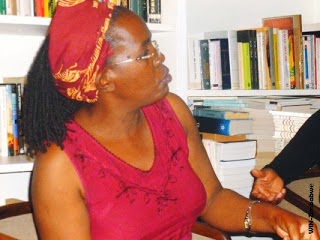
 Writer Memory Chirere and Jesesi Mungoshi, actress & wife of great wordsmith Charles Mungoshi discussing before the meeting


 Jesesi Mungoshi spoke at length about Charles Mungoshi's writing habits and his relationship with her from early days

Lexta Mafumhe Mutasa aka The Lexta Sensation, spoke about his father, Nobert Mutasa one of the masters of the Shona old world novels

The Lexta Sensation at ease

 Writers Shimmer Chinodya and Elvas Mari (also National Arts Council Executive Director) sharing a moment

 Writer Shumirai Nhanhanga stressing a point during open discussion while Chirere, who also was master of ceremony, listens

Writer and ZWA Chairperson Musaemura Zimunya

New writer and blogger Chipo Musikavanhu who closed the meeting with a short thankful speech

Group Photo of some of the writers who attended the meeting (from left), Shumirai Nhanhanga, Shimmer Chinodya, Musaemura Zimunya, Memory Chirere, Jesesi Mungoshi and Charles Mutyavaviri


WIN Newsletter, Issue No 76 coming soon...


04 April 2014

We Are Updating Our Blog


Dear our valued readers,

Please note that we are in the process of updating our blog so that it reflects what we do in terms of programmes for aspiring writers and any other relevant information. Please be patient. We never fail our blog readers! The WIN blog is your and our literary pride. 

Thank you.

(From the WIN-Zim Team)


29 March 2014

Next Issue Coming Soon


WIN Newsletter, Issue No 76 
around the corner....

From the archives: WIN-Zim's memorable participation at the 2013 ZIBF captured new writing talent  


Got something to share?
Write to us: winzimbabwe@gmail.com


15 March 2014

ZIBF Goes To Bulawayo


Busy AmaBooks stand at the 2012 Bulawayo Book Fair
(Picture: AmaBooks)

BULAWAYO BOOK FAIR 2014

THEME : “Indigenous Languages, Literature, Art and Knowledge Systems of Africa”

ZIBFA invites all respective and interested parties to participate in the special two-day event as follows:
28 – 29 March 2014

VENUE: Large City Hall, Fife Street/ L. Takawira Avenue

ADMISSION: FREE! FREE! FREE!


                                 ACTUAL EXHIBITION                   0900-1700hrs

                           CHILDREN’S READING TENT    0900-1700hrs

                            LIVE LITERATURE                       1000-1600hrs
                                                            
28 March 2014

VENUE: Small City Hall, Fife Street/ L. Takawira Avenue

WRITERS’, PUBLISHERS’, BOOKSELLERS’ AND LIBRARIANS’ WORKSHOP
0800-1700hrs
·        Writing And Publishing In Indigenous Languages – Author’s Perspective
·        Writing And Publishing In Indigenous Languages – Publisher’s Perspective
·        Folk Tales, Riddles And Proverbs As Indicators Of Social Values
·        The Meanings of African Dances
·        Traditional Arts As Intellectual Property
·        Indigenous African Methods of Medical Diagnosis and Treatment
·        Current Trends In SiNdebele Writing
·        The Contribution/ Role Of Libraries In Promoting Indigenous Languages
·        Selling/ Marketing Indigenous Languages And Literature Books
·        Writing for the Children in Indigenous Languages

If you wish to participate please register for the workshop by 18 March to avoid disappointment!!

IT’S SOMETHING WORTH YOUR WHILE!  DON’T MISS OUT!
For further details contact us at ZIBFA Head Office on: 04 702104, 704112, 702108
04 702129, Email, events@zibfa.org.zw, zibfa@yahoo.com


See you there!

10 March 2014

WIN Newsletter, Issue No 75


EDITORIAL
  Writer, poet, journalist Tinashe 'Mutumwapavi' Muchuri will be in the team of WIN manuscript readers 

It is one thing to think that you are a writer and it’s totally a different thing to actually write. Ideas are not copyrightable material, therefore insignificant until they materialize into some tangible form. WIN has dedicated its sweat to aspiring writers who are actually in need of help on how to make the gems in their heads materialize on paper and those who have already written down their ideas in various ‘shapes’ and yet need professional, inspirational guidance to proceed.
We will not sing the negative song. Let’s do this: Move on.
The year 2014 is gathering momentum already in the literary arena. We encourage new writers to participate in competitions arising. This newsletter contains just so much for you and pre-empting would do injustice, enjoy yourself!

WIN UPGRADES MANUSCRIPT ASSESSMENT PROGRAMME

Eresina Hwede, one of the manuscript readers

Two-time NAMA Awards nominated WIN-Zimbabwe has intensified its efforts to set up a department that will look into members’ manuscripts with the aim to identify publishable works.
Local established writers, and recently, international writers, have put weight behind the association’s re-structured manuscript assessment programme, with some already confirming their willingness to start reading manuscripts. A few more established writers are yet to confirm.
Tinashe Muchuri, Memory Chirere, Eresina Hwede and recently joined American poet Georgia Banks-Martin (insert) will assess WIN members’ manuscripts and generate reader’s reports with recommendations to help the new writers and in the process identify publishable works. Banks-Martin ran an online poetry workshop with a WIN group of poets in June 2011.
New writers are encouraged to submit, at a fee, their manuscripts (complete novels, collection of maximum 50 poems, complete script and collection of maximum 10 short stories) either as readably handwritten or typed hard copy or soft copy saved as PDF.
 An original copy of the submitted manuscript should always remain with the author and assessment period will take at most 2 months to ensure thorough analysis and progressive help by the readers.
Those with works already with WIN will be contacted soon.
The manuscript assessment programme has become an important pillar of the Publishing Unit which WIN is envisioning and for which it has restlessly begun looking for more support in all forms possible.
For more information on the manuscript assessment programme, please do not hesitate to contact the WIN office.

ONE OF BIGGEST GOLDEN BAOBAB PRIZE CONTRIBUTORS
By Beaven Tapureta
(Article first appeared in Panorama Magazine few days ago) 

No one in Africa and beyond can speak of home-grown coveted writing prizes without mentioning the Ghana-based Golden Baobab Prize for African children’s literature.
And for a country to have been represented four times in a prestigious competition like the Golden Baobab Prize means a lot for its literature.
Only established in 2008, the Prize has become an outlet for Zimbabwean writers starved of platforms to showcase their flair in writing for children, a grey area left untouched seemingly after the death of the exemplary, award-winning children’s writer Stephen Alumenda and the silence of other writers who share the same passion for the little ones’ reading matter. 
However, there are some writers such as Stephen Chifunyise, Memory Chirere and Ignatius Tirivangani Mabasa, who are still writing for children but not as much as to meet the demand for children’s literature in Zimbabwe. 
The Golden Baobab Prize has raised awareness on the significance of writing for children in Africa and Zimbabwe’s new generation of writers seems to have risen to the call among other countries.

 Ivor W Hartmann

Mirirai Moyo
The Prize was first brought home by Ivor Hartmann in its inaugural year (2009) for his story Mr. Goop written for the age group 12-15 years; in 2010 Mirirai Moyo did the country proud when she won the Prize for her story Diki written for children between the ages six and 11 years; and in 2012 young writer Rutendo Chabikwa scooped the Rising Writer award. Last year writer Sabina Mutangadura was on the shortlist for the Early Chapter Book Prize for her amazing story Seven.
Could Zimbabwe’s notable participation in the Golden Baobab Prize be said to be an indicator to local publishers and writers that the time is now to invest more in children’s literature?
In a brief conversation with this writer, Golden Baobab Prize co-ordinator Nanama B Acheampong applauded Zimbabwean writers for their outstanding feature in the Prize.
“We're very proud of the stories that have come out of Zimbabwe. The winners truly deserved the prizes in the years that they have won. Over the years, both South Africa and Nigeria have been the biggest contributors to the prizes but the majority of our winners have come out of South Africa,” Acheampong explained.

Indeed Zimbabwean literature has attracted the world’s attention with the recent spotlight on NoViolet Bulawayo, author of We Need New Names which has featured from one international award or special mention to another, she pointed out.

“Zimbabwe has the literature world's attention. There is clearly amazing writing talent coming out of Zimbabwe and we would love it if more of these writers decided to create stories for children. This year, we hope to receive many submissions from Zimbabwe. The stories we receive from there are usually so colourful and full of Zimbabwean pride and references,” Acheampong said. 

The 2014 Call for Submissions Now Open


In its announcement of 2014 call for submissions, the Golden Baobab Prize said it is celebrating its sixth anniversary by bringing aboard African illustrators of children’s books.
Three new exciting awards have been launched, namely, The Golden Baobab Prize for Illustrators and The Golden Baobab Prize for Rising Illustrators with prizes worth $5000 and $2 500 respectively, and The Golden Baobab Lifetime Achievement in Children’s Literature Award.

In the past five years there were only three awards, that is, the Golden Baobab Prize for Picture Book, Golden Baobab Prize for Early Chapter Book which this year both have monetary prize of $5000, and the Golden Baobab Prize for Rising Writer which has $2 500 cash prize.
The newly added illustration awards emphasize the significance of illustrators in the whole production of children’s books and seek to motivate this normally forgotten group of artists in mainstream literature.
“We expect to receive many more submissions for the 2014 Golden Baobab Prizes for Literature this year. We have also had such positive reactions to our newly launched Golden Baobab Prizes for Illustrations and we’re looking forward to being pleasantly surprised by the submissions we receive,” said Acheampong in announcing the 2014 prizes.
Entrants will submit illustrations as per Golden Baobab specifications which can be found on the organization’s website www.goldenbaobab.org.
The Lifetime Achievement in Children’s Literature award seeks to recognize African writers/illustrators who, during their lifetimes, have made creative contributions of outstanding significance to the development of African children’s literature.
According to Golden Baobab, the six prizes invite entries of unpublished stories for children written by African citizens irrespective of age, race, or country of origin.
The deadline for the 2014 call for submissions is June 29 and winners will be announced in November 2014. The winners will receive cash prizes altogether worth $20 000, opportunities to be published, invitation to the Awards ceremony, mentorship, press opportunities and exhibitions of winning illustrations.  


ZIBF 2014 CALL FOR PAPERS: HARARE BOOK FAIR


Musaemura Zimunya, ZIBF Chairperson

Theme: Indigenous Languages, Literature, Art and Knowledge Systems

Dates: Indaba 2014:  28 July – 29 July

Venue: Harare Gardens, Harare, Zimbabwe


As you may now be fully aware, the approved Theme for The Zimbabwe International Book Fair Association 2014 is: Indigenous Languages, Literature, Art, Literature and Knowledge Systems of Africa.  We are, therefore, pleased to announce that the dates for The Zimbabwe  International Book Fair have been set for 28 July – 2 August 2014.

In arriving at this Theme, we were guided by a few factors, among which are: the overwhelming submissions on the subject of African languages, literatures, heritages and knowledge systems whose majority were unfortunate to be turned down for lack of space in the just ended ZIBF 2013 Indaba Conference Programme; the enlightening presentations in the ZIBF 2013 Indaba on patterns and benefits of the use of African medicines and the dangers of losing valuable health practices due to prejudice and official neglect and the timely movement to beneficiate African heritages through the tourism economy; the compelling indications from the ZIBF 2013 Writers Workshop regarding the urgency to recognize African languages, literatures and art forms as creative media and repositories of knowledge systems deserving as much attention as languages and literatures conveyed in English and other Western languages;  the necessity to recognize and celebrate the vast literary and academic productions and publications in and about African languages in Zimbabwe and other countries across the African continent; sending a message of support and encouragement to authors, readers, researchers and publishers in these language media that their efforts play a vital role in intellectual growth, national and African continental development; embracing the hitherto marginalized languages of Zimbabwe that are now legally recognized under our new Zimbabwean constitution which have a potential to transform our understanding of our national identity and the importance of tolerance of ethnic diversity; and the vast potential for creating a truly festive atmosphere through the participation of African folk artists, readers folk artists and performers as part of the activities of our 2014 Book Fair.

In order to guide prospective presenters regarding the spirit of the 2014 Zimbabwe International Book Fair, here are some topics around which to operate:

PROPOSED TOPICS

THE INDIGENOUS LANGUAGES SITUATION IN AFRICA

·                  African Lingua Franca: Lessons From Swahili And Afrikaans
·                  Indigenous Languages, Ethnic Identities And Values
·                  Politics And African Languages
·                  Writing And Publishing In Indigenous Languages
·                  Translation In Literature Across Indigenous Languages
·                  The Place Of African Languages In The Digital Era
·                  Lexicography

LANGUAGE, FOLK ART AND THE AFRICAN WORLD VIEW

·                  Orature and African History
·                  Folk Tales, Riddles And Proverbs As Indicators Of Social Values
·                  Folk Games As Repositories Of Culture
·                  The African World View Through Language, Literature And Art
·                  Meanings Of African Dances
·                  Folk Arts As Expressions Of Knowledge Systems

THE LANGUAGE OF INDIGENOUS RELIGIONS

·                  Indigenous Religions As Cultural Expression
·                  The Influence Of African Religious Values In The Pentecostal
Movement
·                  The Relationship Between African Cultures and Indigenous African Churches
·                  The Place Of Language And Music In Religious Practices
·                  Morality, Spirituality And The Philosophy Of Life In Indigenous
African Cultures

AFRICAN HERITAGE

·                  Archives And Culture
·                  The Value Of Heritage In The National Economy/Development
·                  Zimbabwean Sculpture
·                  The Relevance Of Indigenous Art In Africa
·                  Challenges Of Modernization Against Indigenous  Languages And
Cultures
·                  Great Zimbabwe As An Expression Of Folk Art And Culture

INTELLECTUAL PROPERTY AND COPYRIGHT

·                  Traditional Arts As Intellectual Property
·                  Communal Arts And The Concept Of Intellectual Property
·                  Rights Of Communities Over Stolen Artefacts And The Problem Of
Restoration

HEALTH LESSONS FROM INDIGENOUS TRADITIONS

·                  Modern Health Practices And African
Medicines
·                  African Trees And Herbs As Resources For Individual And
Community Health
·                  Indigenous African Methods Of Medical Diagnosis and Treatment
·                  Healthy And Unhealthy Indigenous Food

INDIGENOUS LANGUAGES AND LITERATURE

·                  The Relationship Between Indigenous Languages, Art And Writing
·                  The Problem Of Standardization Of African Languages
·                  Current Trends In African Writing In Indigenous Languages
·                  The State  Of Electronic And Print Media In Indigenous Languages
·                  African Music As Literature
·                  Film In Indigenous African Languages
·                  Experiences in translating the Zimbabwean Constitution
·                  Challenges of Broadcasting in indigenous Languages

We, therefore, invite prospective presenters to submit Abstracts which should reach our ZIBF Offices by no later than March 31, 2014 for scrutiny and approval by the Executive Board of ZIBF.  Abstracts should be of limited length but no longer than 500 words and may be submitted by hand post or surface mail or email: zibfa@yahoo.com copy events@zibfa.org.zw 

Musaemura B Zimunya - Chair, Executive Board, Zimbabwe International Book Fair Association


2013 WIN SHORT STORY COMPETITION

3rd Prize Winning Story (Senior Category, English Language Section)
Paranoia scored 68%. And here is what Memory Chirere who judged the competition commented, “Good story. The twist in the end is sharp and exciting."
  
Paranoia


By Tawanda Godfrey Kandenga

Marlee was standing in the hallway polishing the wooden walls with a white linen cloth. Outside, in the cobbled driveway a car came to a halt. Then she heard Lena greeting someone. Greeting in most the sweet way. A male voice went along with her. There was no doubt that the husband was back.
   Then the footsteps drew closer as the two came to the main door. It was now near her that she could hear their voices now. Suddenly, something struck her and she stood frozen. His voice! There was an eerie chord of familiarity underneath his voice, or some kind of spell that made her spine flap in acute disbelief. In a space of a heartbeat she could admit that it was not the first time to hear that voice. The memories of that the voice that had remained a complete torture of her life, cocooning her in a shadow of grief whenever she heard the echoes of madness melting into nothing, vanishing into the dark, the haze, the pain so unfathomable.
   At once she walked to the huge window on the left so she could see the man, but he was already deflected. The turning of the door lobe stirred her heart and she quickly walked back and continued polishing. Polishing with increased velocity.
   “Marlee, please come to the sitting room. My husband is now here,” she heard Lena calling.
   “You got a new maid again. How come you didn’t tell me? You still remember what the last one did?”
   “Don’t worry Vincent. For this one you have to trust me. She seems the best we ever had.”
She heard the two speak as she came to the door. She walked in, holding her breath under her nose. Before she even sat down Lena started.
  “Hey Marlee, meet Vincent my husband. Vincent this is Marlee, our new maid.”
   Marlee felt her eyes heavy at once. Suddenly it was as though something inside her quaked and snapped. Vincent? What’s going on here? What is this?  How can this name match that voice? That voice she had heard and which had made her grieve, wrestle with her own heart. She was asking herself many questions in a short space of time. It seemed a dark past was returning again, a seed coming back to life, a ghost rising from the grave.
   She lifted her eyes and finally looked at him. He seemed not to bother to look at her but remained gazing at Lena…yet an awful gaze if not a snarl. The sight of him was unbearable, so tense to tear down everything in her that she almost felt running out of air.
  This was the man she had met more seven years ago when she was eighteen. The man she had met at a party when she was forced to drink beer for the first time. The man she barely knew. The man who disappeared the same night and she realized she was not a virgin anymore. This was a man she had so swiftly fallen in love, gazing at him in the lustre that night. And a year later she was struggling with a pregnancy of an untraceable man.
   Her eyes remained glued to him; she thought she was already dead. Her mind raced. Raced with an unfathomable speed. With dubious and insane grief. Inside her she was trembling down to her bones.
   It was clear Vincent was watching her through the corner of his eye. Then he turned and looked at her too. He smiled at her but it was easy for her to see his vulnerability, his emotions plummeting down in chagrin and misery. When he rose up and shook her hand she felt him shivering too, his hands sweating already.
   “Nice to meet you Marlee I hope you’ll will feel comfortable here with us. We are just a small family expecting a baby soon. Did my wife tell you she is four months pregnant?” he said, his voice tormenting her again. She was surprised he was confident. His voice was not shivering as he did inside. She had thought he was going to pass out.
   “I’m already comfortable Sir. Madam told me. Nice to meet you too Sir,” she finally spoke.
Lena kept watching them. In silence. In her own acute shock. She could easily read the way they were looking at each other, the indubitable chemistry between them so easy to feel. The way they held each other’s hands, totally unaware of her presence until she faked a cough.
   “I guess you too know each other already,” Lena finally chipped in. There was heavy silence. Heavy as all sands of the seas!
   “No we don’t know each other. It’s just that your new maid seems different from the ones that left,” Vincent released Marlee’s hand and walked away.
   “Ok Marlee, get back to work. My husband needs coffee now. I must be on my way to the meeting in town now. Will be back here at 2.00,” Lena smiled, grabbed her car keys and left the house at once.
   Eventually, she heard Lena driving off. She was in the bathroom, the door shut and sobbing out of her pain when she heard a soft knock on the door. Before she even said a word, the door winded open and Vincent was standing before her, gawping into her eyes.
   “Who are you and what do you want here?” he asked.
   “I know you Vincent. The second I saw you I remembered you. I remembered everything,” she felt even hard to breathe.
   “So what do you think you’re doing here? You think it’s a good idea.”
   “I never knew this is where you’re hiding Vincent. After all these years…”
   “That’s long time ago, we can’t raise the dead,” he took a step away from her.
   “That’s right Vincent we can’t raise the dead. Right now all you need is get out this room, go to the sitting room wait for your coffee. You heard your wife commanding me,” she pushed him out and slammed the door shut.
   In the kitchen she made the coffee with haste, the kind of haste that burnt her with emotion. Then she stood immobile staring at the ready coffee, hard to bear that her next move was to face him again. Again! Face those perceptive dark brown eyes!
   Her fingers were trembling terribly. Tears glistened in her beautiful hazel eyes, the tears she struggled to stop. Painfully, she lifted the china tray with the coffee and started towards the sitting room.
   He sat in there very quiet, seeping through a deep emotional confusion. He remained glued to the sofa, watching her coming through the corner of his eye. Then she came near him, in front of him that she felt her skin singeing, twitching in emotional discord.
   She swallowed hard as he abruptly gazed into her eyes, a gaze that seemed to peel off her skin. A gaze that felt as if he was undressing her, that seemed to pierce swiftly to the past, the unforgettable past, that night he had so madly made love to her in the dimmed shadows of the bleak light hung up on the ceiling.
   As if automatically propelled, her eyes fell into his and she panicked. She could not help it and in the blink of an eye the tray escaped the grip of her fingers, flew down to the floor and smashed into numerous pieces. The hot coffee splashed on her bare leg, then to the marbled floor, its thin films of smoke surging and vanishing into the delicate room air.
   She threw herself to the sofa screaming hard as the pain of the burn sank and soaked through her blood. The next thing Vincent was holding a pack of ice slowly moving it up and down her wound. He kept doing it slowly. In silence!
    “Thank you Vincent. I think now I can do that myself,” she said taking the ice from his hand. He did not speak but stood upright and looked away. 
   “You really think I should go, don’t you,” she asked.
   “I can’t think anymore. Am out of myself now! Marlee I’m now a married man about to start a family and then you are coming along. It maybe coincidence that you’re here but I feel so much drained. What do you expect me to do?” he walked to the window and looked outside to the green backyard garden. He did not want her to see those tears smothering his cheeks.
   “I’m sorry Vincent I intruded. I shouldn’t be here I know but I think it’s high time that you know you’ve a daughter with me. Tiffany’s now five staying with my mom and she needs a father,” she said.
   “Marlee, did you just say of me having a daughter?” he asked with much concern, stepping fast back to her.
   “I have a daughter, me?” Now he was fawning before her. “Tell me the truth because…”
   “Because what...? Don’t you remember that night at the party when we did it?” she dropped a tear.
    “I remember that Marlee, but how come I believed I couldn’t bear children all this while. Lena was always blaming me since we married three years ago. She never got pregnant and she was always blaming me until she came home the other day saying she’s pregnant. I believe she’s now four months…”
   “Vincent I’m sorry I didn’t come to destroy your home but don’t be fooled. Your wife is not pregnant. I think she is faking you. How come she is doing this to you?”
   “I don’t know if she’s lying”
   “It’s alright Vincent I will pack my bags and go now. If you need to see your daughter I guess you will look for me,” she said, leaping up from the sofa.
   She made a few steps to the door and then she sank as she felt his hand holding her to stop, pulled her closer to him. Now he could not hide his tears from her.
   “Let me go Vincent. Just let me go!” she yelled.
   “I can’t let you go Marlee. I made a mistake when I disappeared that night. I tricked you but the thoughts of you had tormented me all this long. So don’t go,” he said with a melting voice.
   “What do you want me to do Vincent? Tell me. This is your new life and we both know it can’t be ruined. Goodbye Vincent, let me go,” she disentangled her hands from his and scuttled out of the room.
   In her room she packed fast. Packed in the shadow of grief. In the shed of tears! In tormenting pain. Quickly, she dashed out of the house and left as fast as she could. Vincent watched helplessly from up the balcony.
   As she ran down the street, her phone rang. It was Lena.
   “Madam,” she was breathing high.
   “Oh no Marlee am not your boss, but you’re my boss,” she could hear Lena laughing at the end of the line.
   “What are you talking about Lena?”
   “I’m not Vincent’s wife. He never got married since he ditched you. All was a plot to get you back. I was just helping him. What do you think?” Lena revealed, still laughing.
   Marlee melted down to her bones. Her heart pounded once, and was looking up the street back to the big house, the beautiful house with a rooftop that pierced through the tall pine trees.
 Then behind her the car hooter yanked into her ears. It was Lena now winding down the immaculate window glass.
   “Come on Marlee! Do me a favor. Get in the car let me finish my job. Let me bring you to that big house, to your waiting man.”
   “Get off my sight! You almost choked me,” Marlee laughed, jumping into the car. It was kind of a laugh she had never had in years. She was just too paranoid. (Copyright: Tawanda Kandenga)

(24-year old Tawanda Godfrey Kandenga is currently studying for an Honors Degree in Development Studies with Bindura University of Science Education. Tawanda loves writing and he takes inspiration from great authors such as John Grisham, Lane Harris, Dambudzo Marechera, Charles Mungoshi and many others. He writes short-stories, poetry and novels. He is also on attachment at the WIN-Zim office. Someday, he wishes to be a great writer, the Zimbabwean Shakespeare.)
Ed. Note: Feel free to pass on your comments to winzimbabwe@gmail.com.


INTWASA SHORT STORY COMPETITION NOW OPEN

The late Dr Yvonne Vera, after whom the competition is named

Intwasa Short Story Competition 2014
 The Intwasa Short Story competition enters its 10th year this year. The competition was inaugurated in the first year of the festival and is an annual literary event seeking to promote original creative writing talent in English. The competition also seeks to promote Zimbabwean narratives from Zimbabwean writers be they in Zimbabwe or living in the diaspora. In 2011 the award for the winner was named Yvonne Vera Award, after the late Dr Yvonne Vera. Dr Yvonne Vera was literary genius whose works include Why Don’t We Curve Other Animals? Nehanda, Without a Name, and Butterfly Burning. The Yvonne Vera award carries a $500 cash prize. 
The rules of the competition are as follows:
 - There is no particular theme
 - Entries must be written in English
 - Entries should be previously unpublished
 - Only one entry per person
- All work must be original
 - Entries must be typed
. - Maximum words are 3000 words.
 - The competition is open to all Zimbabwe citizens and residents
 - Entries must be submitted by June 30, 2014
 - Late entries will not be accepted.
- Only the short-listed candidates will be personally notified 
The Intwasa Short Story Competition is one of the very few literary writing competitions in Zimbabwe and continues to encourage and promote the original Zimbabwean narrative.
Writers are invited to submit their stories to:
Intwasa Arts Festival Office 403
4th Floor, LAPF House
8th Ave/J. Moyo St
Bulawayo
Email: info.intwasa@gmail.com or info@intwasa.org  
Regards,  
Runyararo Cynthia Mutandi
Festival Administrator

THE YOUTH PERSPECTIVE

Blame it on the alcohol

By Mimi Machakaire
Let’s put ourselves in the shoes of a drunkard and really think about how it feels to be high on life, when it’s mixed with the alcohol of course. The feeling must be very exhilarating as it gives you the false hope and courage of doing things you wouldn’t normally do while you are sober. Now I, myself, have never been drunk before, believe it or not, but I have seen enough of the younger generation get drunk in the most awkward of places. I've seen people get drunk in bars, homes, cars and in the middle of the streets. I've seen them fall over themselves more times than once. I've even seen heavy fights break out over something as small as who took the last shot.  The thing is that not all of us drink, some of us are a lot stronger than others and do not give in to peer pressure when it comes to drinking. That actually gives one an advantage because you get to see and actually remember everything that happened on that crazy night out when you were with your friends. The best part is telling them (your friends) what happened, what they did, what they didn’t do and who they did it with. You being the sober one just get to sit back and enjoy the show, the reviews of that show. That’s another story altogether!
Alcohol tends to have different effects on different personalities. Some become the exact opposite of who they really are. Martin (not real name), my friend, for instance, becomes loud and I mean loud enough to reveal certain things that you really don’t want to be said out loud. Naturally he is a very shy and quiet person so you can imagine the effects a couple of beer cans can have on a person like him. On the other hand, my brother becomes extremely generous with his food when generally he is rather stingy and one of my other friends becomes unexpectedly violent when usually she's a very kind and well natured young lady.  However, the rest of the younger generation has a similar reaction towards alcohol, which is saying things that would have probably never been said while they were sober. As the saying goes "drunken words are sober thoughts".
When these things occur the youth like to blame it on the alcohol as it is quite certain to them that they would have never acted that way or said those things if they were sober. Whether or not that’s true, you can see it for yourself. All you need to do is just avoid drinking at the next gathering, relax and watch what happens. I can guarantee that you will not only gain some hilarious memories for your later years to come but you can also plan ahead for the next time you don’t want to watch your friends and the people you care about make absolute fools out of themselves. In the meantime, get a good hearty laugh out of the situation because you'll never know when you are going to get the chance to see something insane happen again. And to the adults of the world who claim to have never done anything wild before in their entire lives, think about the youths before you jump to conclusions or else you get the wrong impression of some of the youths in your life who drink and remember you were once youths too. 

POETRY 

This space
Is with poetry
Of poetry
This poem
Is without space
This space
Is not without a case
There is no mind
Without poetry
No poetry
Without mind
Write one today
There will be
Two birds tomorrow
Let them fly, free them
Send yours
Share with others
That we can smile, laugh, and cry

(By WIN-Zim)

THANK YOU FOR READING!