EDITORIAL

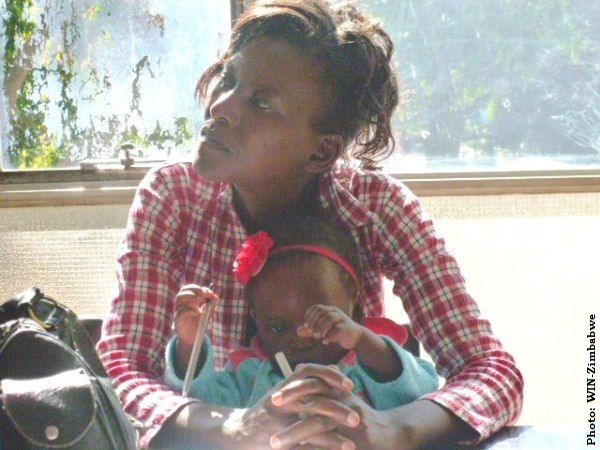
Glen View 2 High Writers' Club has been one of our proud and active affiliates in Harare
We warmly welcome you to the 70th issue of the WIN Newsletter which, as you will see, carries an enticing menu specially prepared for you readers and writers. We continue to encourage aspiring writers, especially those writing in Ndebele and Tonga languages, to submit poems and short stories for the '4 in 1' Poetry Anthology and the WIN/GAT Short Story Writing Competition respectively. The deadline for both calls is August 31, 2013. However, the call for poems may be extended to ensure equal representation of all four languages. Manuscript assessment is moving well. Members whose manuscripts have been assessed are being contacted so that they can collect their reports. WIN is glad with preparations for its Epworth Community Outreach Programme which is being supported by Culture Fund of Zimbabwe Trust in partnership with Sweden. Last but not least, keep in mind the new dates for the 2013 Zimbabwe International Book Fair posted earlier on this blog. We thank you all for the support. Keep writing!
CREATIVE WRITING TIPS
With

Christopher Mlalazi
Figuring The Inciting Incident

A very simple but
important creative writing tip - something should happen within the first 4 to
8 pages of a novel/film manuscript that should accelerate the story. It is
called the inciting incident, a trigger to all the events that will follow. If
this moment is delayed further, the story has the danger of becoming a grand
yawn as the reader fails to find that special hook that will keep him
or her entranced.
This is paraphrased from 'Story,' the creative writing manual by R. McKee which I find very useful. Every construction in a story should be planned to the minutest detail. Nothing is random. No planning, and the whole construction might face the possibility of collapsing, like a badly planned building.
This is paraphrased from 'Story,' the creative writing manual by R. McKee which I find very useful. Every construction in a story should be planned to the minutest detail. Nothing is random. No planning, and the whole construction might face the possibility of collapsing, like a badly planned building.
CHIRERE GOES POETICAL

Memory Chirere
(Insert framed picture: Chirere in his youth)
(Insert framed picture: Chirere in his youth)
THE modest working title of Memory Chirere's forthcoming poetry anthology,
Bhuku Risina Basa, loosely translated, useless book, belies a range of genius.
Chirere, an internationally renowned author, academic, editor and literary
critic said he had decided to come out of his closet with more than 100 poems
authored over 20 years as private exercises.
Bhuku Risina Basa is being trimmed for press with the help of Chirere's
editor and friend, the veteran poet Ignatius Tirivangani Mabasa and will be
released by Harare-based Bhabhu Books during the last quarter of this year.
Chirere's inventory includes Somewhere in This Country (2006), Tudikidiki
(2007), Toriro and His Goats (2010) and Charles Mungoshi: A Critical Reader
(2006), co-edited with Prof Maurice Vambe.
THE REGULAR WRITER
A Personal Book Review
By

Tendai Chinhoro
Author: Sharon Felicia Acheampong
Book Title: Worlds Apart
Publisher: Self-Published at Authorhouse USA, 2012
ISBN Number: 978-1-47723438-9(se)
ISBN Number: 978-1-47723439-6(e)

Having seen that l had nothing to read during the national
Heroes holidays l contacted writer Sharon Acheampong using todays’ faster
technology, asking if I could get from her a copy of her novella Worlds Apart.
This book had been on my to-read list since she publicised
it highly on her Facebook page and others had commented very well about it. She
said she actually had copies, not just a copy and that it was going for $10. We
therefore quickly arranged to meet in town...the priviledge of sharing the same
community with a published writer.
I soon was glad to have Sharon Felicia Acheampong’s
copy of Worlds Apart warmly
autographed “To Tendai, May all your dreams come true, Love’’. I must admit that l was not impressed
by the size of the book in terms of page numbers. I was expecting something
thick that would carry me throughout the four-day holiday. I am one of those
readers who love voluminous books.
Nevertheless, though small, the book left a lasting
impression on my mind. It left me searching for answers about issues it provoked
yet not answered in the book’s short space. After all, art rarely prescribe answers
to social problems, it only challenges societies to think by exposing the social
ills. Small but fast paced, Worlds Apart
evokes thoughts, yet leaves you with room to glean your own solutions.
I loved the plot and the style to the extent that
I continuously had to look at the back cover to have a glance of the author,
and her biography.
Writing and publishing such a book at 22, Acheampong
is just amazing. She has practically raised issues far beyond her age such as gender-related
murder and neglect, power and governance, sacrifice, love and tolerance.
The book addresses the highs and lows of a Royal
family, covering two generations-from Yannick to Alexander.
However, I feel that the writer did not do much in
the exploration of the character Achaia who seems to have a big impact on his
brother Yannick who also qualifies as the main character, the King of Kimora
people.
As a reader l also felt denied a broader knowledge
of the Kimora way of life outside the Royal Palace, or how the Royal Council
articulated its mandate. I also expected an exploration of Yannick's emotions
after losing his kingship, and after separating with his twin daughter, Alexis.
A normal biological father would really go through some emotional upheaval: that
inadequacy as a father who knows that there is his child somewhere who is not
getting his/her deserved fatherly love.
I found Worlds
Apart too fast-paced and serving as a ‘summary’ of a big story of the Kimora
People. This may then call for an expanded version of the book in future.
Worlds Apart is a book for all age groups, good even for
literature studies. It is equally a fine script for an African movie. The
style, the plot and all social connections in the book are just exceptional,
though I must admit that l struggled with the print which is italicised for the
greater part of the book. All
the same, we have a new star on the Zimbabwean literary scene.

Sharon Felicia Acheampong
OPPORTUNITIES FOR WRITERS
MORLAND WRITING
SCHOLARSHIP

It can be difficult for writers in the early stages of their career to write
and to earn a living outside writing at the same time. To help fill this need
the MMF has established up to three Morland Writing Scholarships every year.
The Scholarships will be open to anyone who has been born in Africa or both of
whose parents were born in Africa.
Grant
The Scholars will receive a grant of £18,000, paid monthly over the course of one year.
The Scholars will receive a grant of £18,000, paid monthly over the course of one year.
Scholar’s Undertaking
In return for this the Scholars will agree that 20% of whatever they subsequently receive from what they write during the year of the Scholarship will be paid to the MMF which may be used to support other promising writers and possibly to expand the Scholarship scheme in later years.
In return for this the Scholars will agree that 20% of whatever they subsequently receive from what they write during the year of the Scholarship will be paid to the MMF which may be used to support other promising writers and possibly to expand the Scholarship scheme in later years.
Qualifications
To qualify for the Scholarship a candidate must submit a piece of published work, or an excerpt from a piece of published work, of between two and seven thousand words to be evaluated by a panel set up by the MMF which will include MMF trustees and past participants in the Caine Prize. The Scholarships will be awarded based on these submissions although the Foundation may also wish to question certain candidates or ask for other work.
To qualify for the Scholarship a candidate must submit a piece of published work, or an excerpt from a piece of published work, of between two and seven thousand words to be evaluated by a panel set up by the MMF which will include MMF trustees and past participants in the Caine Prize. The Scholarships will be awarded based on these submissions although the Foundation may also wish to question certain candidates or ask for other work.
Proposed Work
The candidates will be expected to submit a brief description of the work they intend to write (ideally 200 – 500 words). It should be a new work, not a work in progress. The proposed work must be in English as must all candidacy submissions. Please also tell us in fewer than 100 words something about yourself and your background.
The candidates will be expected to submit a brief description of the work they intend to write (ideally 200 – 500 words). It should be a new work, not a work in progress. The proposed work must be in English as must all candidacy submissions. Please also tell us in fewer than 100 words something about yourself and your background.
It is not the intention of the MMF to give editorial or publishing advice to
Scholars. They will have to find their own agents and publishers although it is
to be hoped that over the years the Morland Scholarships will come to be
recognised as an incubator of talent. Works which relate to Africa are likely
to be preferred by the judges.
Scholarship Requirement
The only condition imposed on the Scholars during the year of their Scholarship is that they must write. They will be asked to submit by e-mail at least 10,000 new words every month until they have finished their book. The Scholarship will terminate if a Scholar fails to submit the required work on time unless prior authorisation has been received. The Foundation is happy to support fiction or non-fiction but not poetry, plays or screen-plays. The Scholarship is intended for writers who want to write a full-length book of 80,000 words or more.
The only condition imposed on the Scholars during the year of their Scholarship is that they must write. They will be asked to submit by e-mail at least 10,000 new words every month until they have finished their book. The Scholarship will terminate if a Scholar fails to submit the required work on time unless prior authorisation has been received. The Foundation is happy to support fiction or non-fiction but not poetry, plays or screen-plays. The Scholarship is intended for writers who want to write a full-length book of 80,000 words or more.
The closing date for submissions for the first series of Writing
Scholarships will be October 31st 2013. The Scholarships will be announced in
December 2013 and will run for the whole of calendar 2014. The Trustees reserve
the right to vary the terms and requirements of the Scholarships at their
discretion.
Please go to FAQs about the MorlandWriting Scholarships to answer any further questions.
All enquiries and submissions
relating to the Morland Scholarships should be directed to MMF@blakman.com.
CORDITE BOOKS PROMOTE AFRICAN CRIME FICTION WITH
US$1000.00 PRIZE
Cordite Books, an imprint of Lagos-based
Parresia Publishers is attempting to bring back African crime and spy
fiction by launching a manuscript competition that will see the winner
walk away with a N160, 000 prize money and a publishing deal.
The initiative is spearheaded by multiple award winning author Helon
Habila, joint owner of the imprint, alongside Parresia, and editor of
the new series the imprint will be producing.
In a previous interview with Sunday Trust, Habila, author of three
novels, said he is passionate about the genre and blames the perceived
poor reading culture on the shortage of soft literature in the crime and
spy fiction category.
The competition, which is open to African writers, is for full length
novel manuscripts between 60-80,000 words and must be set in part on
the African continent.
NEW MAGAZINE LAUNCHED, CALLS FOR CONTENT
A new literary magazine, The Write Mag, due for publication next month is calling for contributions.
A new literary magazine, The Write Mag, due for publication next month is calling for contributions.
The new literary magazine for Zimbabwe is published by an
organisation Write Africa headed by author Lawrence Hoba and will be
edited by Memory Chirere, a renowned Zimbabwean writer, literary critic,
lecturer and blogger.
The quarterly magazine will have its focus
on promoting African literature. The magazine will be produced in
print, with an online version available on the Write Africa website.
Write
Africa is a membership-based organization that works with various
partners and stakeholders to ensure the development of a culture of
research, writing, reading and the use of modern technologies to
highlight key social and developmental issues.
POETRY
Tribute to Chiwoniso Maraire
(1976 – 2013)

Chiwoniso Maraire
(picture taken from zimbeatnews.blogspot.com)
Lines
Written On Hearing Of A Death
For Chiwoniso Maraire
For Chiwoniso Maraire
The
mist is getting closer.
I’ve lost sight of the edges now,
I think I can see yesterday.
Its traces like the looks of eyes
I should remember
And though they may still be watching
I cannot piece so many ghosts
Who whisper in the hands of strangers
Whom they borrow when they visit
To tell me they are still listening
To my last breath
But the wind catches in the throat;
Part melody, old songs,
As incomplete as dust and fragments
From a book that I was writing
Somewhere when I dreamt last night
Between love’s torn-out missing pages.
I’ve lost sight of the edges now,
I think I can see yesterday.
Its traces like the looks of eyes
I should remember
And though they may still be watching
I cannot piece so many ghosts
Who whisper in the hands of strangers
Whom they borrow when they visit
To tell me they are still listening
To my last breath
But the wind catches in the throat;
Part melody, old songs,
As incomplete as dust and fragments
From a book that I was writing
Somewhere when I dreamt last night
Between love’s torn-out missing pages.
By
Bart Wolffe
Enjoy more poetry by Bart Wolffe here
THANK YOU! THANK YOU! THANK YOU!